
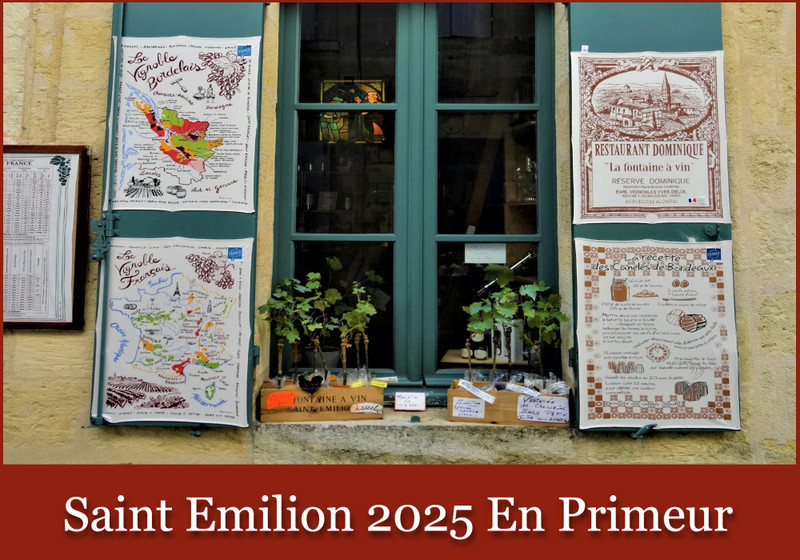
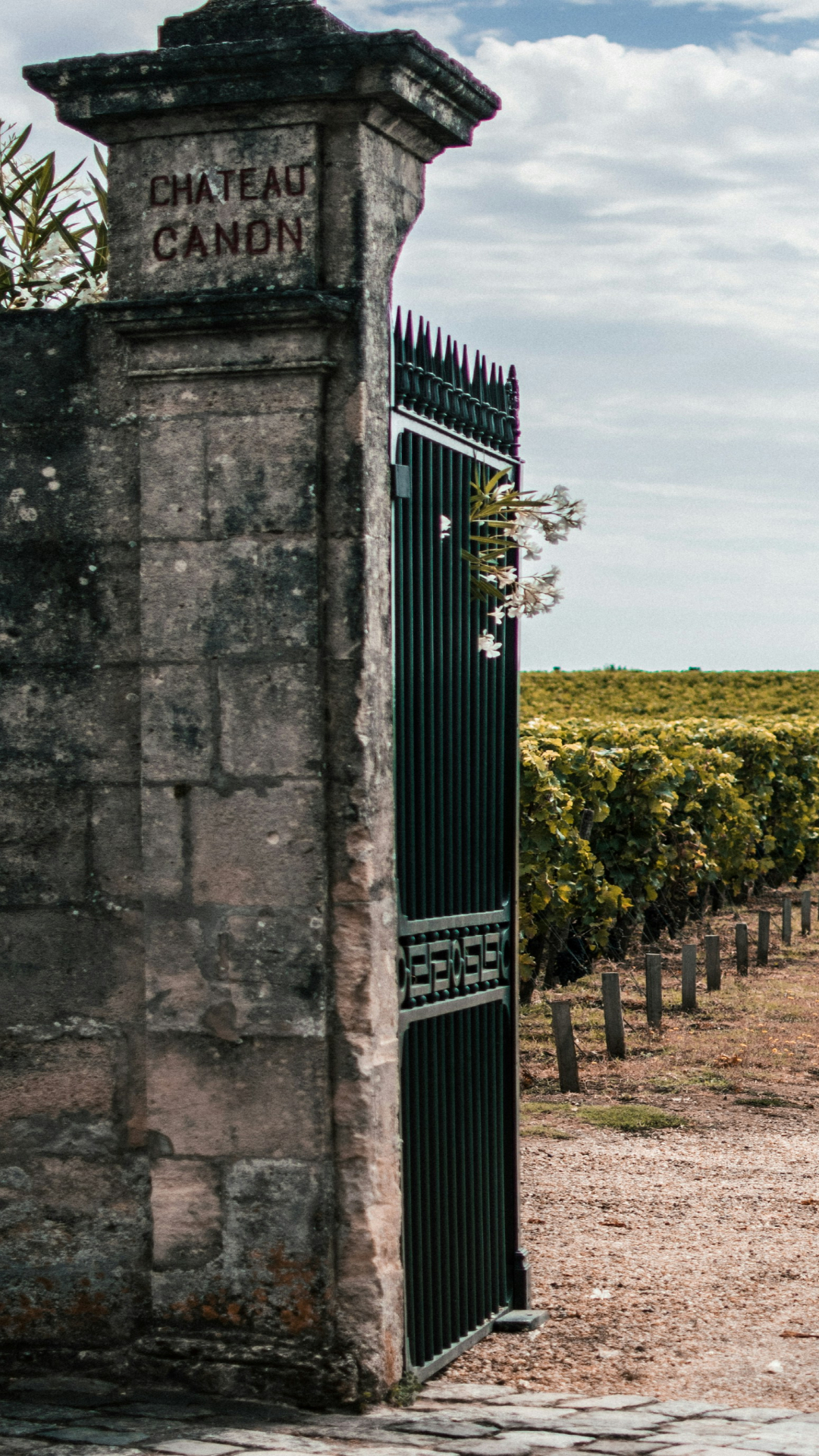
Let's face it, the town of Saint Emilion, on the right bank of the pituresque, winding Dordogne River, is a tourist trap. It could be a Hollywood back lot, or a Disney theme park with visitors flocking to experience the photogenic town by the thousand, with Americans, Japanese and the British (who like to live nearby) leading the way, filling the buzzing streets during the summer months where the numerous bistros, restaurants and countless wine shops do a roaring trade as a consequence. I'm sure that, since my own visit there many years' ago, the list of nations visiting has changed, but it's almost a land of religious pilgrimage for Bordeaux wine connoisseurs. If you take a walk away from the main streets, you can still find private houses (with washing on the line outside), walled gardens (with plant pots filled with blooming flowers), and peace and quiet! Amazingly, the famous chateaux are all within a few minutes from the town and you can easily spot your favourite vineyard as it's well-signposted. I came across the driveway to Chanel owned Premier Grand Cru Classé Chateau Canon purely by chance on a back lane away from the town. My visit wasn't during the "En Primeur" campaign, so I had to make do with tastings at lesser known properties, and I missed out on trying the best wine from this fabulous region. An excellent pizza, with some unamed house red, though, in one of the pavement cafés made for a great lunch. It's not all about Michelin star dining, but I'm not going to knock it if you get to eat and drink the very best on offer in Bordeaux!

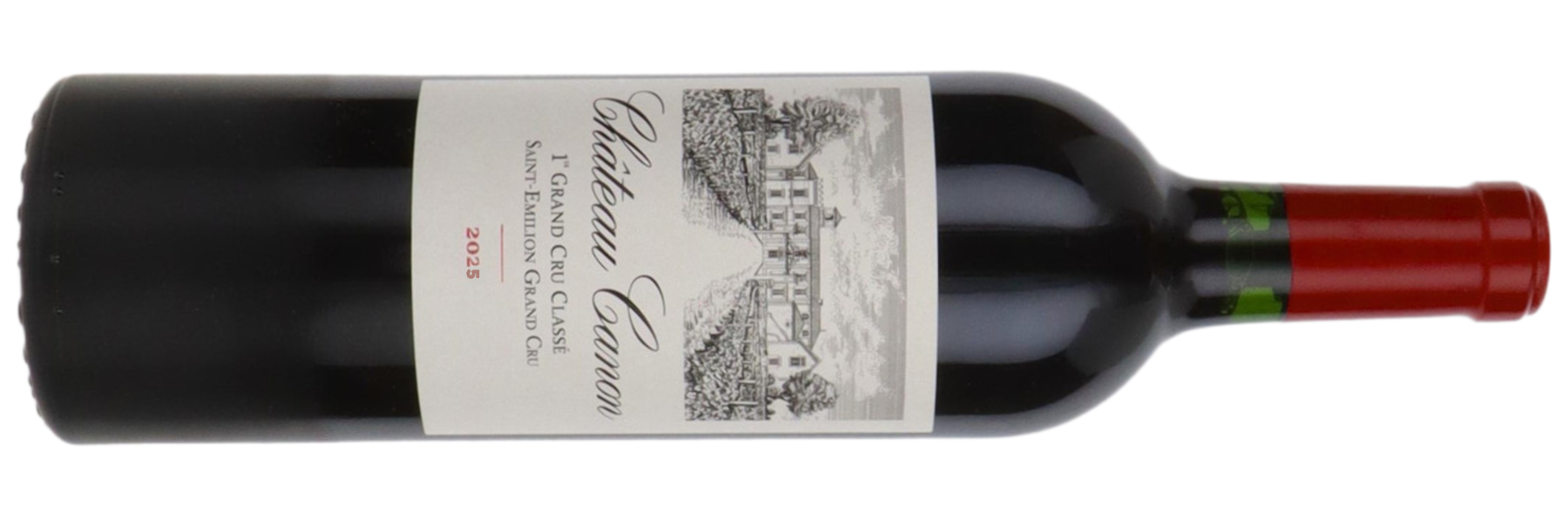
"The bouquet of red, white, and purple flowers is what initially grabs your attention. From there, it is the wealth of fruit, with its intensity, and the oceanic influences that keep you focused. The palate balances lift, energy, concentration, and juiciness perfectly. The finish delivers sweet, ripe black and red fruits, which linger and expand, leaving you with layers of salt-tinged, sweet, ripe fruits and a touch of herbs and mint in the endnotes. Key points of the vintage came not only from the ripeness of the fruit, but, interestingly, from their normal yields, which aided in lowering ABV levels and giving better balance. The wine blends 76% Merlot, and 24% Cabernet Franc. 14% ABV. 3.5% pH. The harvest took place from August 28 - September 18. Yields were 40 hectoliters per hectare. Drink from 2030-2060."
2025 Chateau Canon review: 98/100 points, Jeff Leve, The Wine Cellar insider, 2026
"Refined floral bouquet. Tannins silky and so refined. Smooth texture that belies the power behind. Long, clean finish. Fresh and harmonious."
17.5/20 points, James Lawther MW, JancisRobonson.com, 2026
Also awarded (96-99)/100 ponts by wine critic William Kelley of the Wine Advocate.
Just released onto the "En Primeur" market at £435 per six bottle case. Chateau Canon is available to order now. This one certainly looks like a winner when compared to the "superstar" chateaux's prices!
There's a great deal of wine made in Bordeaux (it's the largest wine region in the whole of France) and, surprisingly, Saint Emilion contributes a meagre 6% of it. Remarkably, there are over 800 individual properties producing wine within the main Saint Emilion appellations. Too many to name, too many to drink. The first official classification, benchmarking the quality of Saint Emilion producers, was set up in 1955, with properties being put into either Saint Emilion or Saint Emilion Grand Cru. The latter is further split into Grand Cru Classé, Premier Grand Cru Classé "B" and, at the very pinnacle of quality, Premier Grand Cru Classé "A". These chateaux classifications are reviewed every 10 years (unlike the rest of Bordeaux which has basically remained unchanged since 1855) with the most recent 2022 edition classifying 85 properties achieving the highest three quality levels, including 2 Premier Grand Cru Classé "A" (Chateau Figeac & Chateau Pavie), 12 Premier Grand Cru Classé "B" and 71 Grand Cru Classé. A further 200+ properties produce wine under the standard Saint-Émilion Grand Cru appellation, and around another 500 are labelled as basic level Saint Emilion. Prior to the 2022 classification, Ausone, Figeac and Cheval Blanc were the only "A" rated properties, with both Chateau Angelus and Chateau Pavie being upgraded. Subsequently, Chateau Ausone, Cheval Blanc and Angelus have all left the classification entirely. Confusion reigns! Thankfully, the Saint Emilion wines available to purchase on the "En Primeur" futures market usually come from just these top level chateaux. It's not compulsory to sell this way, so don't expect all of these wines to be available in worldwide markets every vintage.
To the north of Saint-Emilion proper (across the River Barbanne) you'll find the four additional "satellite" village appellations of Lussac-Saint-Émilion, Montagne-Saint-Émilion, Puisseguin-Saint-Émilion, and Saint-Georges-Saint-Émilion. Not so well-known individually, but still contributing to the huge choice of wines available from Bordeaux, they offer good entry level red wines at very reasonable prices.
White wine cannot, technically, be produced in Saint Emilion, but those that are made here have to be labelled as generic "Bordeaux", so don't expect to see a "Saint Emilion Blanc" any time soon. FYI: "Cheval Blanc" is definitely a RED wine, it's only the name that translates to "White Horse".
The 2025 EP campaign has mostly been about the "left bank", Cabernet Sauvignon based wines, but if you head for the limestone plateau in Saint Emilion, there are plenty of brilliant wines waiting for you. These are built around blends of Merlot and Cabernet Franc and, at the top end, offer vibrant fruit and gorgeous purity. As is the norm, you need to have good finances available to purchase these superstars of Bordeaux, but there are also some better value wines out there.
Two of the greatest Saint Emilion properties are located on the western edge of the appellation, almost into Pomerol, and both Cheval Blanc and Figeac have come up trumps with their wines in the hot 2025 vintage.

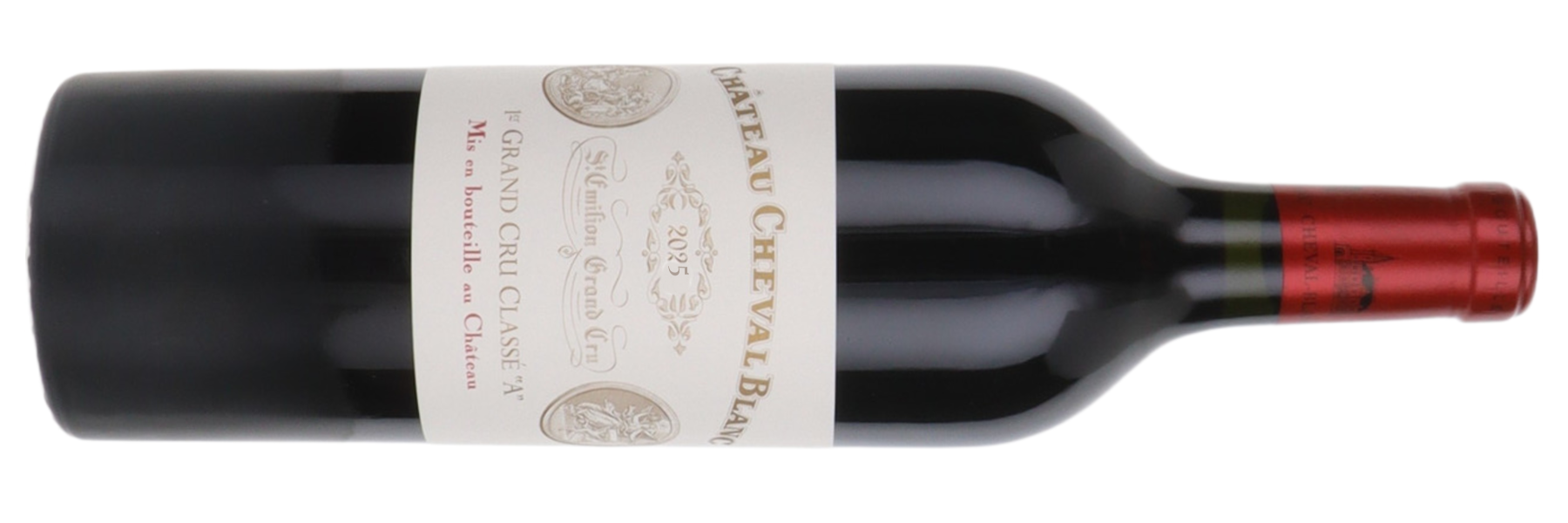
"Purple in hue, the wine explodes with an array of flowers, smoky truffles, black plums, black cherries, blue fruits, orange rind, tobacco leaf, licorice, and chocolate in the perfume. However, the palate is the main event. The mouthfeel perfectly balances its hedonistic tendencies with a touch of reticence, in a good way. There is length, volume, intensity, opulence, and lift. The seamless finish provides silk and velvet tannins, allowing the depth and purity of the fruit to stand out in the extensive, vibrant finish. The key to the vintage was the combination of a dry summer, which lowered yields, and the much-needed August rains, which brought about full maturity. 46 of 47 parcels were placed into the blend. It is important to note that no second wine was produced. Even more importantly, very little Cheval was produced. Yields were a scant 15 hectoliters per hectare, making this the lowest yields in the history of the estate. The wine is made from 51% Merlot, 45% Cabernet Franc, 4% Cabernet Sauvignon. 12.7% ABV, 3.6 pH. The harvest began September 18 for the Merlot, finishing their Cabernet Franc on October 3. Drink from 2030-2070"
2025 Chateau Cheval Blanc review: 99/100 points, Jeff Leve, The Wine Cellar Insider, 2026

If you're after "perfection", and 99 points just won't do, Chateau Figeac has managed the ultimate recommendation from at least one international critic. A jackpot, prize winning, perfect 100 points.
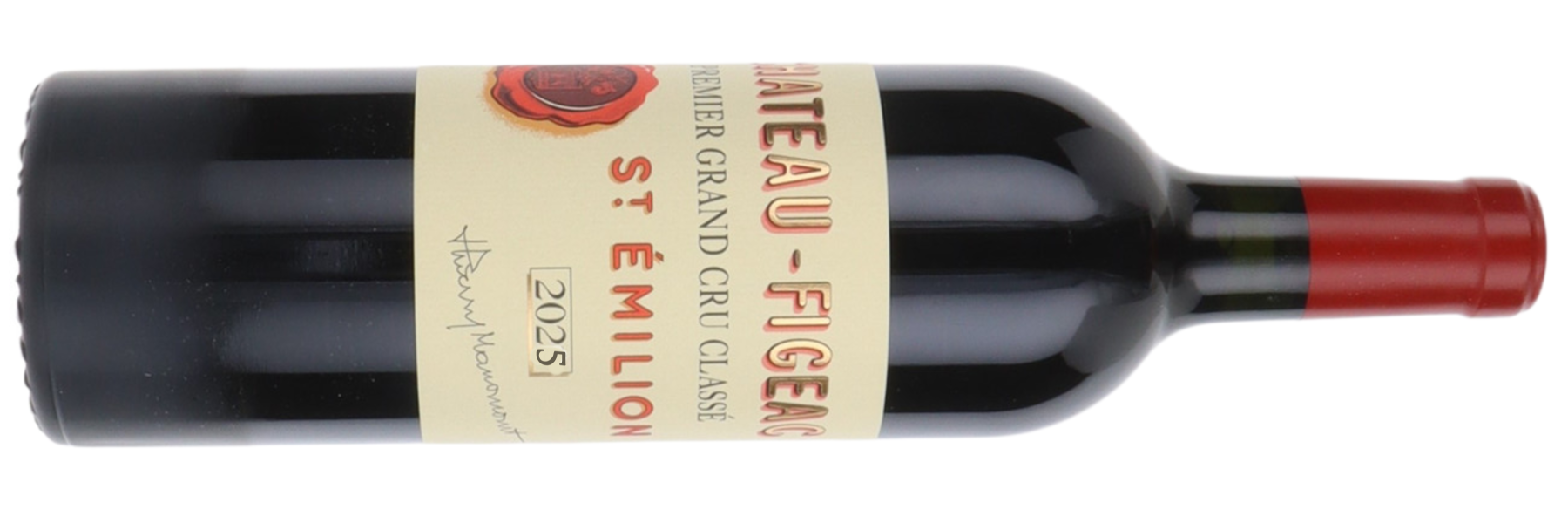
"Deep dark ruby garnet, opaque core, violet reflections, delicate edge brightening. Delicate herbal spice, fresh red heart cherries, delicate cassis, a hint of mandarin zest, mineral touch. Complex, tightly meshed, black cherries, good freshness on the palate too, silky-soft, ripe, supporting tannins that are very well integrated, extract-sweet finish, salty touch, has great length, very seductive style, perhaps the most precise Figeac ever"
2025 Chateau Figeac review: 100/100 points, Falstaff (Austria), 2026
Released now at only £690 per six bottle case. This is much lower than the expected market rate for Figeac. Go for it!


Immediately to the east, and neighbouring Cheval Blanc, is Chateau La Dominique, a Grand Cru Classé wine which is performing fractionally below the quality level of the very top wines. A 29ha estate on mainly sandy gravel and clay soils, the blend here is 85% Merlot with 15% Cabernet Franc, typical of the appellation. Purchased by French industrialist Clement Fayat in 1969, and currently owned by his son Jean-Claude, the property was first known as a wine estate in the late 17th century, and its more recent title came about one hundred years' later as a result of the then owner's Dominica, Caribbean business enterprises. A chateau consistently making excellent wines offering exceptional value.
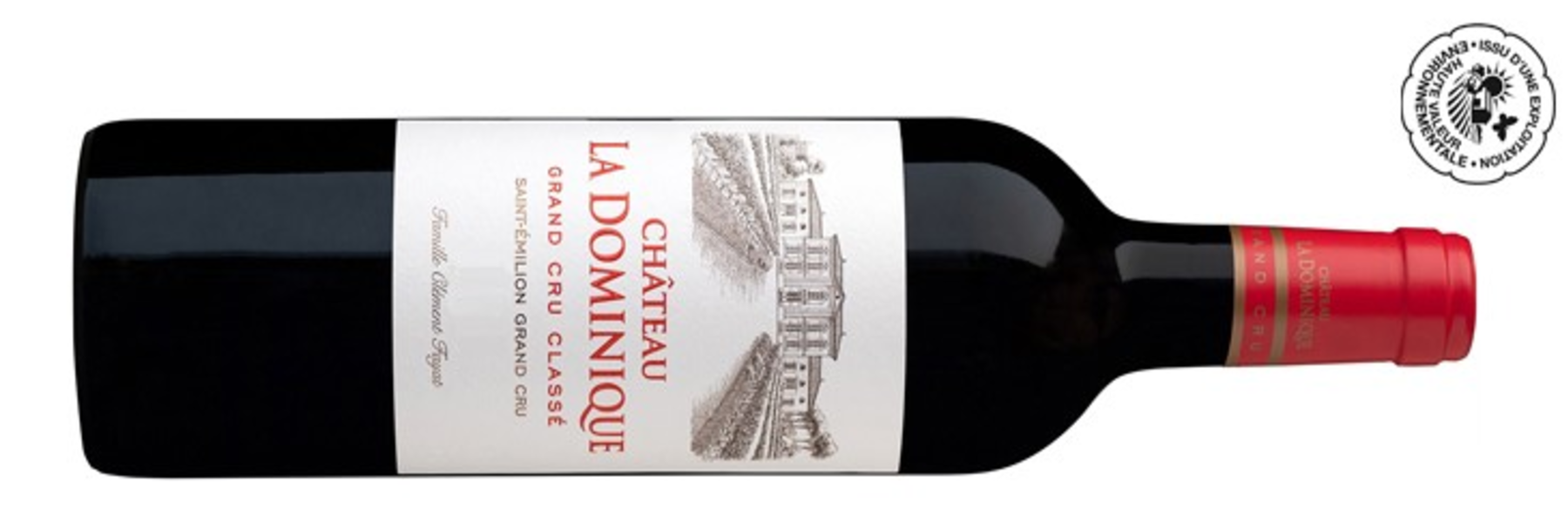
"Silky, elegant, and refined, the wine is medium-bodied, soft, and almost delicate in its delivery. The vibrant red fruits express a gorgeous purity, softness, and refinement, leaving you with fresh, energetic waves of red berries, spice, and a refreshing hint of mint. While you will be able to enjoy this young, it has the potential to age and evolve for at least 2 decades or more. The wine is aged in 50% new, French oak, and 10% amphora. Drink from 2029-2052."
2025 Chateau La Dominique review: 95/100 points, Jeff Leve, The Wine Cellar Insider, 2026
The remarkable difference, though, is the price. Try £2000+ for a six bottle case of Cheval Blanc, or only £178 for La Dominique. That's over 10 times cheaper!
Heading back towards Chateau Canon and the the town itself, there's a grouping of neighbouring chateaux whose names alone will make your mouth water. There's Angelus, Ausone, Beau-Sejour Becot, Clos Fourtet, Fonplegade, Le Dome, La Gaffeliere, and Quintus.

Situated right in the middle of this illustrious grouping is Chateau Berliquet. Ever heard of it? No, me neither. Yes, it's classified as "Grand Cru Classé", but it's a wine that's long been under the radar with connoisseurs. Established in 1768, it's a tiny property with just 7.5ha of vineyards, so there's never been much of it for wine lovers to drink, but since its recent purchase by the Chanel fashion house, its profile has jumped considerably, but its price hasn't followed suit, making it a genuine bargain.
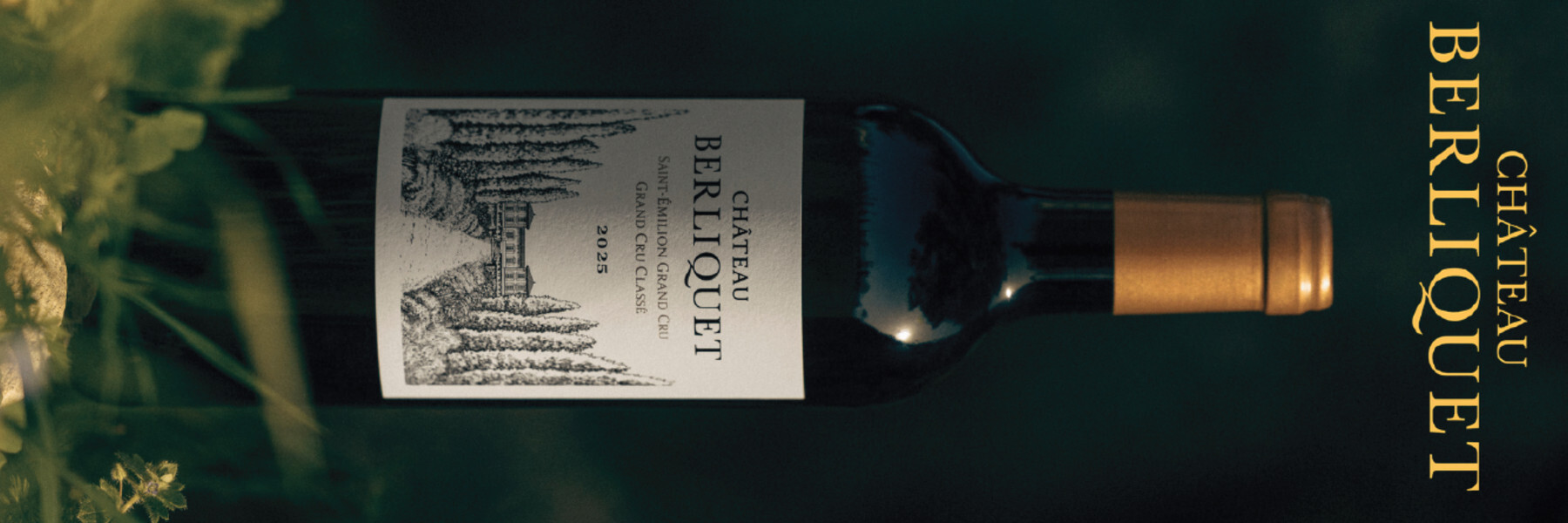
"A blend of 61% Merlot and 39% Cabernet Franc, the 2025 Berliquet is the best wine to emerge from this ascendent property yet. Bursting with aromas of sweet dark berries, licorice and violets, it's medium- to full-bodied, rich and suave, with beautifully refined tannins, lively acids and a seamless, complete profile. The estate's new winery, inaugurated with the 2023 vintage, permits harvesting block by block with greater precision. Readers who haven't been following Berliquet's progress should make a special effort to seek out the superb 2025."
2025 Chateau Berliquet review: (95-97)/100 points, William Kelley, Wine Advocate, 2026
Time is running out to obtain this excellent vintage of Berliquet at only £200 per case of six bottles. Don't ignore this beautiful wine. Such good value. You will regret it if you miss out on this one.


Château Beau-Séjour Bécot is a 22ha Premier Grand Cru Classé "B" property with vines averaging 45 years of age. Some of their oldest Merlot exceeds 70 years and this new vintage should appeal to buyers wanting Saint-Emilion pedigree, layered fruit, and a balanced ageing profile. The vineyards are planted on the limestone plateau to the west of the town, famous for producing some of the appellation's top rated wines and the 2025 vintage is very much competing on a level with the very best chateaux, but at a ridiculously low offer price of just £270 per six bottle case. The chateau, purchased by Michel Becot in 1969, has a deep cellar built from a disused limestone quarry and it now holds over 100 vintages all stored in perfect conditions. His two sons, Gérard and Dominique, continued their father's work in this outstanding estate and, since 2014, the next generation of Juliette Bécot, alongside her husband & managing director, Julien Barthe, are now determined to propel this chateau to even greater heights, and their achievements, over the past few years, have been remarkable. The past five vintages have been awarded nothing less than 95/100 points with 98 & 99 points becoming commonplace. The 2025 offering is equally as good and is set for a fine future.
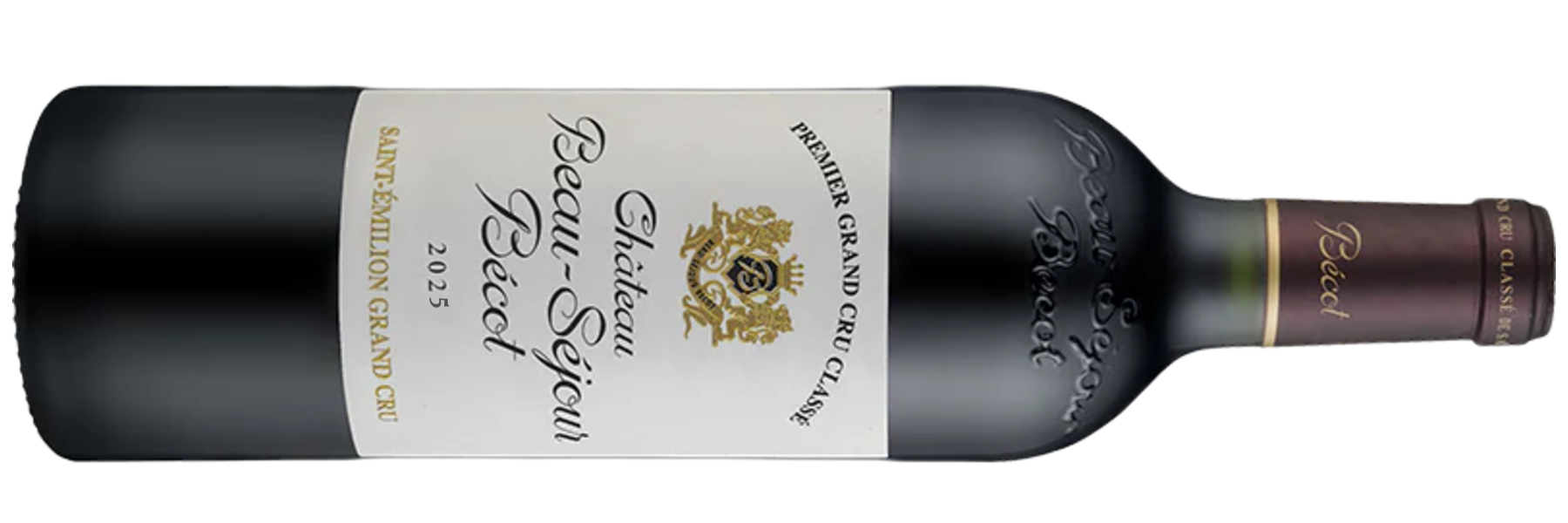
"Beau-Sejour Becot has been on fire lately, and the 2025 shows why. Concentrated, lusciously textured, creamy, and fresh, the wine delivers an intensity of fruit and a surreal sense of purity that hits all your pleasure buttons. The finish is all about its nonstop, seamless layers of velvety fruit that coat your palate as they linger for over 60 seconds. The wine is aged in 50% new French oak barrels, along with foudres and amphora. The wine blends 78% Merlot with 22% Cabernet Franc. 13% ABV, 3.5 pH. The harvest took place September 25 - October 4. Drink from 2030-2060"
2025 Chateau Beau-Sejour Becot review: 99/100 points, Jeve Leve, The Wine cellar Insider, 2026


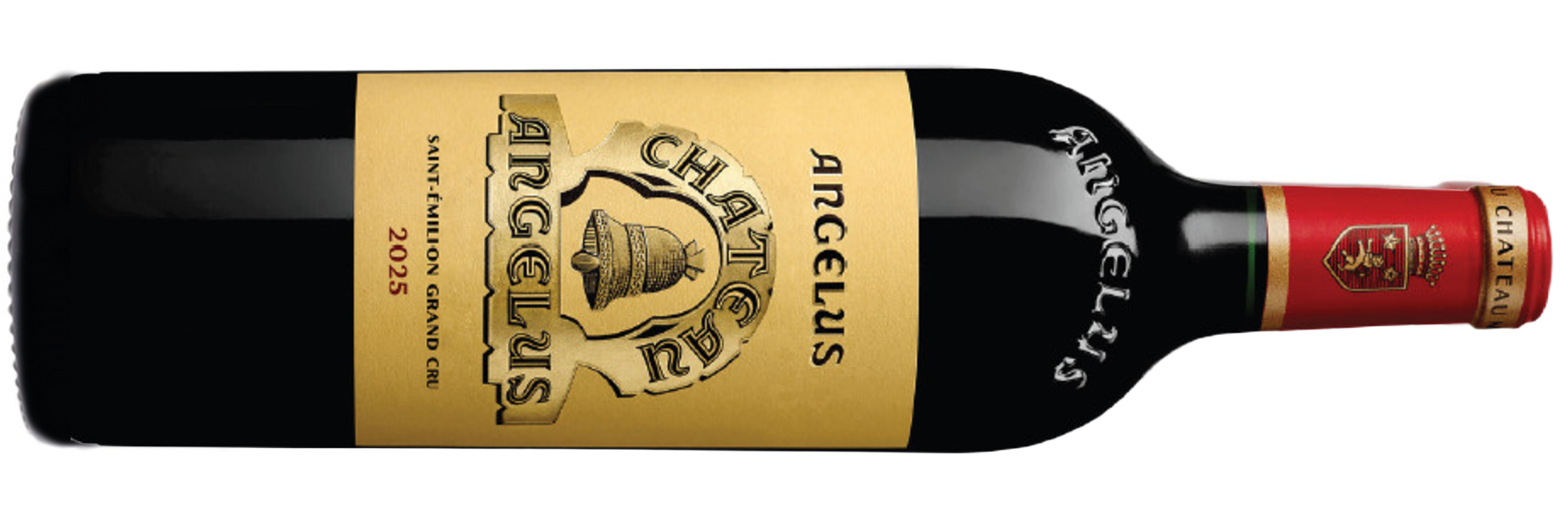
"A blend of equal parts Cabernet Franc and Merlot, the 2025 Angélus is already beautifully harmonious, even at this early stage. Unfurling in the glass with notes of sweet dark berries and plums mingled with notions of violets, licorice and spices, it's medium- to full-bodied, layered and multidimensional, with ripe tannins, lively acids and a long, perfumed finish. Much like its 2022 predecessor, the 2025 underlines that this estate's shift toward greater purity and subtler élevage choices can be sustained even in historically warm years."
2025 Chateau Angelus review: (96-98)/100 points, William Kelley, Wine Advocate, 2026
Pick of this group of famous name chateaux, Angelus, with an asking price of £1200 per case is six times the meagre £200 price of Berliquet. So, a cool saving of a £1000 if you can put up with a wine scoring ONE POINT less than a chateau previously classified as the highest possible Premier Grand Cru Classé "A".
I know where my money would go. Stock up, big time, on either Berliquet or Beau-Sejour Becot, as these low prices don't match the supreme quality of these two wines. Mind you, Angelus is roughly half the price of Cheval Blanc, so horses for courses if you've got the cash!
To the east of the town, there's another fine selection of chateaux including the likes of Bellefont Belcier, La Clotte, Pavie, Pavie-Macquin, De Pressac, Le Tertre-Rôteboeuf, Trottevieille, Troplong Mondot and Valandraud.


Pavie-Macquin, now owned by the Corre-Macquin family, has, since the 1990s, been under the combined winemaking influence of both the talented Stéphane Derencourt and Nicolas Theinpont. Known for modern, fruit-driven "garagist" style winemaking, the chateau's wines have improved considerably and, under their management, in the controversial 2006 classification (and again in 2012), the chateau was upgraded to the level of Premier Grand Cru Classé "B". It now rivals its immediate neighbours, with the vineyards bordering those of Troplong Mondot to the east, Château Pavie to the south, and overlooking those belonging to Trottevieille to the north. Merlot is grown on a clay soil over limestone bedrock, with Cabernet Franc planted on pure limestone. A tiny 2% of the vineyard is Cabernet Sauvignon with the vines averaging 40 years of age across the entire property. A serious wine of note in 2025 living up to its new found reputation.
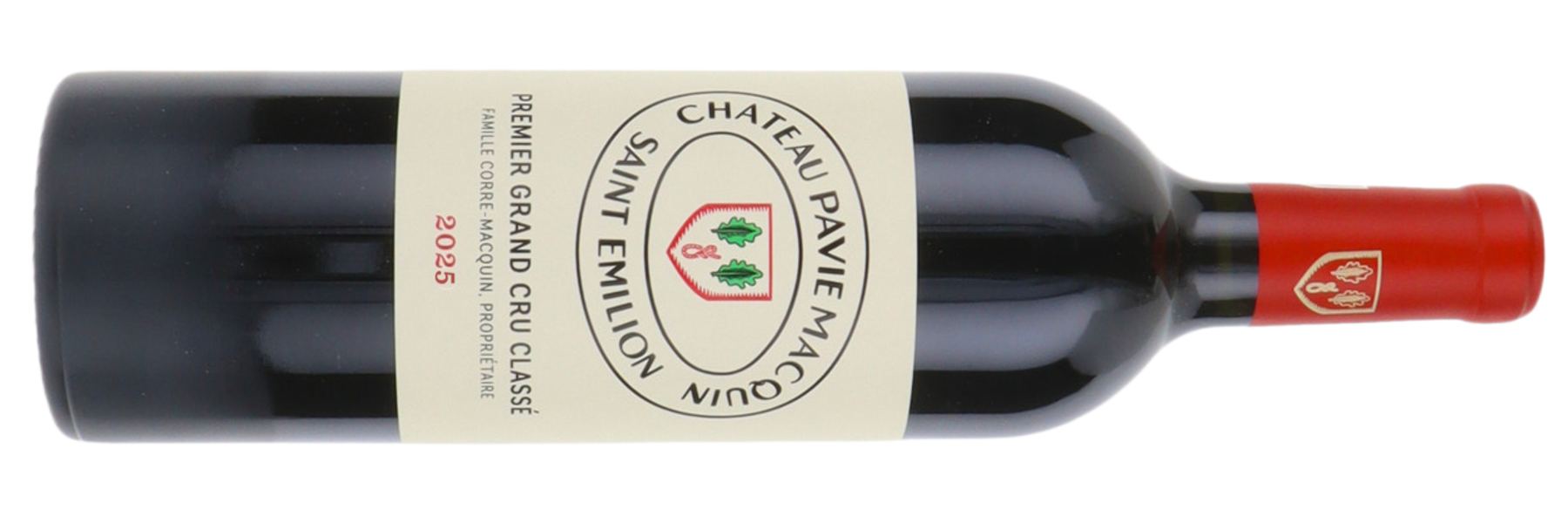
Another wine which is loved by the critics. Here are just two of their reviews for the 2025 vintage release:
"Cherries, plums, tobacco, cinnamon, spearmint, and cigar box aromatics get you instantly focused on the nose. The palate is plush, polished, creamy, elegant, and fresh. The berries display refinement, and purity. The concentrated finish lingers with its blend of vivid, and refreshing mint, tobacco, spice, black raspberries, and Morelleo cherries. To be able to achieve the balance between fruit, and the dynamic freshness in the wine, the late August rains were a huge help. Without that added moisture, ABV levels would have been higher, along with less maturity for the grapes. The wine blends 78% Merlot, 20% Cabernet Franc, and 2% Cabernet Sauvignon. 14.2% ABV, 3.35 pH. The harvest took place September 12 - September 25. Yield were 30 hectoliters per hectare. Drink from 2029-2060."
97/100 points, Jeff Leve, The Wine cellar Insider, 2026
"Inky plum colour, a wine that I always love tasting, flinty gunsmoke reduction, full of charm and personality. Intense, concentrated, pumice stone and steel, a ton of lift and we are slap bang in full limestone character, with a creamy undertow. 30 hl/ha. 40% new oak, Nicolas Thienpont showcasing his skill."
96/100 points, Jane Anson, inside Bordeaux, 2026
Chateau Pavie-Macquin is another estate offering its brilliant wine at a price more akin to a Grand Cru Classé than a Premier Grand Cru Classé. A bargain at £249 per case (6 x 75cl). That's much lower than both their 2022 & 2023 vintages, so well worth a punt for the quality of the wine in 2025.

Before reaching Jean-Luc Thunevin's exceptional (98/100 points, Jeff Leve) Premier Grand Cru Classé "B" Chateau Valandraud at the eastern edge of the appellation, you'll come across another of those "under the radar" properties, Chateau Laroque which, with 61ha under vine, is the largest property in Saint Emilion. The vineyards here were first planted in the 1700s and replanted by the new owners, the Beaumartin family, in the 1960s. The estate used to cover a vast 270ha and is now approximately half that size. The chateau was awarded Grand Cru Classé status in the 1996 classification, and is located about 1km east of Saint Emilion town in a prime position on the limestone plateau, long underexploited but now gaining clarity under David Suire who took over as estate manager in 2015. Things are definitely on the up at Laroque these days. Stylistically, the "grand vin" is unusual in that it is almost a pure Merlot, but that's just another reason to buy some as far as I'm concerned. Just to let you into a little known secret, the unclassified portion of their vineyards provide the fruit for a wine sold under the name Chateau Peymouton, which Frazier Jones happen to stock. Coming under the Saint Emilion Grand Cru appellation, it's yours for only £26.45 a bottle. It's pretty good, too, being awarded 90 points for the 2019 vintage.
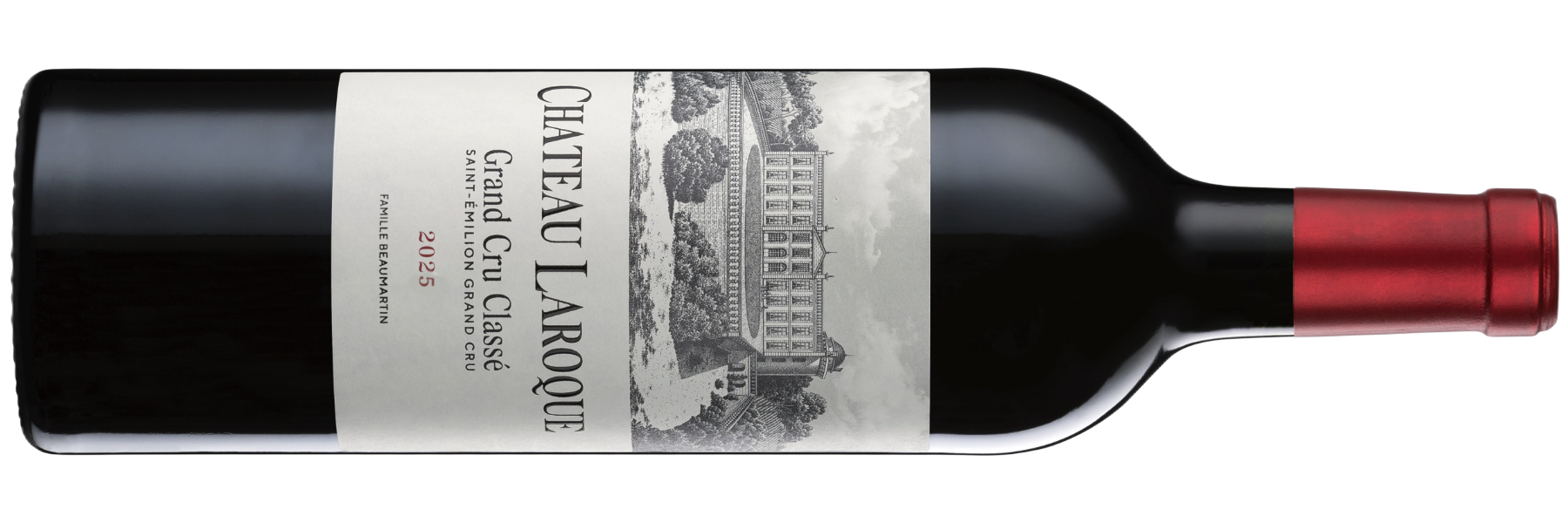
"The estate's signature floral aromatics are on full display, followed by black raspberries, licorice, spice, espresso, and cherry nuances fill the perfume. Fresh, juicy, vibrant, creamy, and concentrated on the palate, the finish delivers its clean, lifted, salty-edged berries with precision from start to finish. The wine was made with 99% Merlot, and 1% Cabernet Franc, 13.8% ABV. Harvesting took place September 10 - September 19. Drink from 2030-2050."
2025 Chateau Laroque review: 95/100 points, Jeff Leve, The Wine Cellar Insider, 2026
This wine comes in at only £117 per case, so you'd better be quick to get your hands on some. Personally, I'm waiting for my own 2023 stock to arrive in the U.K.. I'd love to try it now, but it's going to need a few more years' ageing in bottle to be at its best.

The "En Primeur" wine waiting game shows both the positive anticipation and the negative of having to have lots of patience.
If you truly love great Saint Emilion, you know what you need to do right now.
PS - New Saint Emilion arrivals at Frazier Jones - 2021 Cheval Blanc and 2021 Canon - AVAILABLE NOW IN STORE