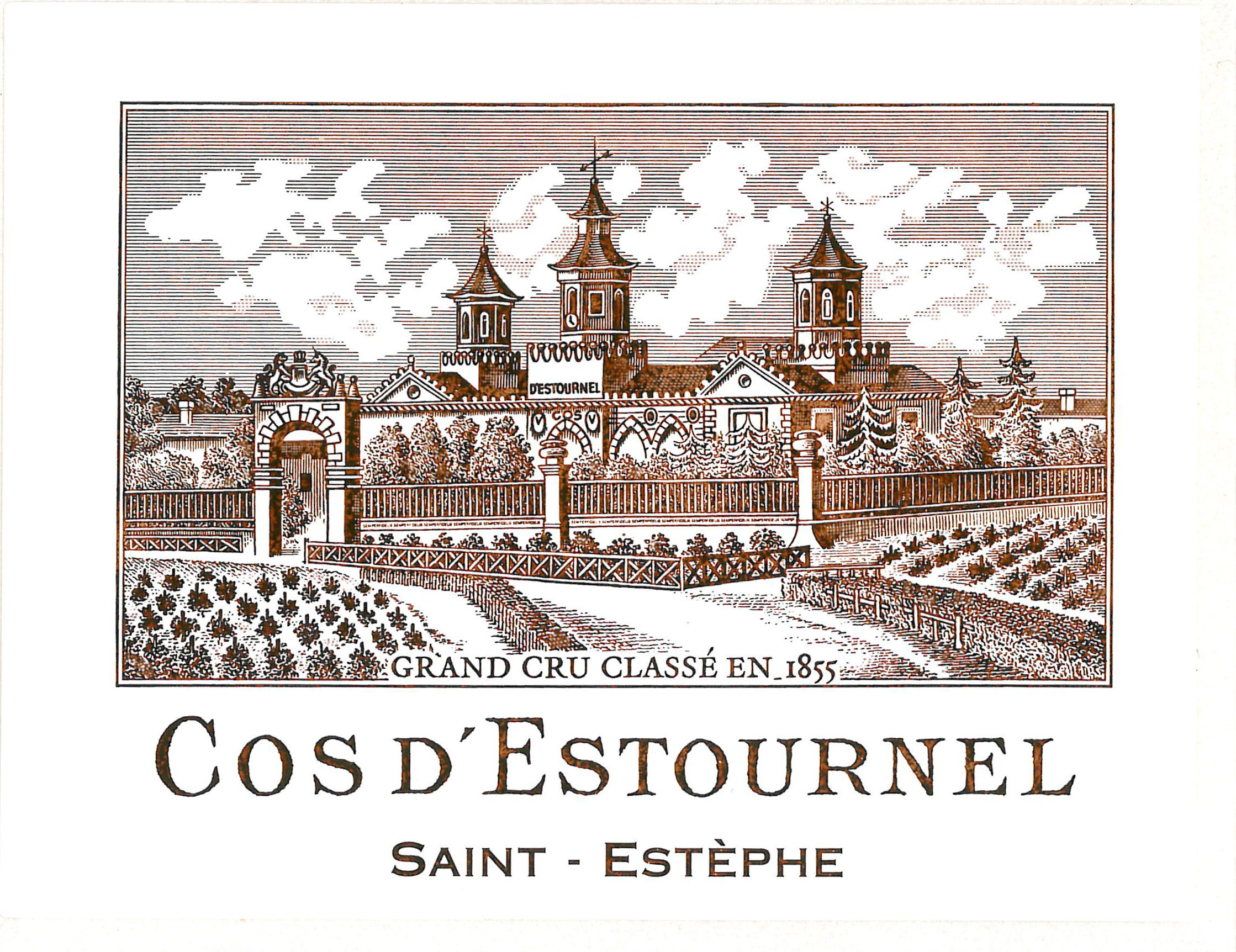
The vineyard of Cos spreads around the château on 91 hectares. The Cabernet Sauvignon vines (60% of the vineyard) find the soil of their choice in the thin layers of gravely soil situated on the top and on the southern slopes of the hill. On the other hand, the Merlot vines (40% of the vineyard) excel on the eastern slopes and on the slopes where the Saint-Estephe limestone bed shows on the surface. The percentage of Cabernet and Merlot varies from one vintage to another according to the year weather conditions, benefiting successively to the one or the other. Plantation is extremely dense (8000 to 10000 vines per hectare) and the average age of the vineyard is high (35 years old on the average) in order to enable the roots to extend excessively and to obtain a very slender yield per vine that will create the "Grand Goût". Only the wines coming from over 20 years old vines will have the name of Château Cos d'Estournel.
First Growths (Premiers Crus): Château Lafite, now Château Lafite Rothschild, Pauillac, Château Latour, Pauillac , Château Margaux, Margaux, Haut-Brion, now Château Haut-Brion, Pessac, Graves, Mouton, now Château Mouton Rothschild, Pauillac.
Second Growths (Seconds Crus): Rauzan-Ségla, now Château Rauzan-Ségla, Margaux, Rauzan-Gassies, now Château Rauzan-Gassies, Margaux, Léoville, now Château Léoville-Las Cases, St.-Julien, Château Léoville-Poyferré, St.-Julien, Château Léoville-Barton, St.-Julien, Vivens Durfort, now Château Durfort-Vivens, Margaux, Gruau-Laroze, now Château Gruaud-Larose, St.-Julien, Lascombe, now Château Lascombes, Margaux, Brane, now Château Brane-Cantenac, Cantenac-Margaux (Margaux), Pichon Longueville, now, Château Pichon Longueville Baron, Pauillac (commonly known as Pichon Baron) and Château Pichon Longueville Comtesse de Lalande, Pauillac (commonly known as Pichon Lalande or Pichon Comtesse), Ducru Beau Caillou, now Château Ducru-Beaucaillou, St.-Julien, Cos Destournel, now Château Cos d'Estournel, St.-Estèphe, Montrose, now Château Montrose, St.-Estèphe
Third Growths (Troisièmes Crus): Kirwan, now Château Kirwan, Cantenac-Margaux (Margaux) , Château d'Issan, Magaux, Lagrange now Château Lagrange, St.-Julien, Langoa, now Château Langoa-Barton, St.-Julien, Giscours, now Château Giscours, Labarde-Margaux (Margaux), St.-Exupéry, now Château Malescot St. Exupéry, Margaux, Boyd, now Château Cantenac-Brown and Cantenac-Margaux (Margaux) and Château Boyd-Cantenac, Margaux, Palmer, now Château Palmer, Cantenac-Margaux (Margaux), Lalagune, now Château La Lagune, Ludon (Haut-Medoc), Desmirail, now Château Desmirail, Margaux, Dubignon, later Château Dubignon, Margaux (Dissolved in 1960), Calon, now Château Calon-Ségur, St.-Estèphe, Ferrière, now Château Ferrière, Margaux Becker, now Château Marquis d'Alesme Becker, Margaux
Fourth Growths (Quatrièmes Crus): St.-Pierre, now Château Saint-Pierre, St.-Julien, Talbot, now Château Talbot, St.-Julien, Du-Luc, now Château Branaire-Ducru, St.-Julien, Duhart, now Château Duhart-Milon, Pauillac, Pouget-Lassale and Pouget, both now Château Pouget, Cantenac-Margaux (Margaux), Carnet, now Château La Tour Carnet, St.-Laurent (Haut-Médoc), Rochet, now Château Lafon-Rochet, St.-Estèphe, Château de Beychevele, now Château Beychevelle, St.-Julien, Le Prieuré, now Château Prieuré-Lichine, Cantenac-Margaux (Margaux), Marquis de Thermes, now Château Marquis de Terme, Margaux
Fifth Growths (Cinquièmes Crus): Canet, now Château Pontet-Canet, Pauillac, Batailley, now Château Batailley, Pauillac and Château Haut-Batailley, Pauillac ,Grand Puy, now , Pauillac, Artigues Arnaud, now Château Grand-Puy-Ducasse, Pauillac, Lynch, now Château Lynch-Bages, Pauillac, Lynch Moussas, now Château Lynch-Moussas, Pauillac, Dauzac, now Château Dauzac, Labarde (Margaux), Darmailhac, now Château d'Armailhac, Pauillac, Le Tertre, now Château du Tertre, Arsac (Margaux), Haut Bages, now Château Haut-Bages-Libéral, Pauillac, Pédesclaux, now Château Pédesclaux, Pauillac, Coutenceau, now Château Belgrave, St.-Laurent (Haut-Médoc), Camensac, now Château de Camensac, St.-Laurent (Haut-Médoc), Cos Labory, now Château Cos Labory, St.-Estèphe, Clerc Milon, now Château Clerc-Milon, Pauillac, Croizet-Bages, now Château Croizet Bages, Pauillac, Cantemerle, now Château Cantemerle, Macau (Haut-Médoc)
Superior First Growth (Premier Cru Supérieur): Yquem, now Château d'Yquem, Sauternes
First Growths (Premier Crus): Latour Blanche, now Château La Tour Blanche, Bommes (Sauternes), Peyraguey, now Château Lafaurie-Peyraguey, Bommes (Sauternes) and Château Clos Haut-Peyraguey, Bommes (Sauternes), Vigneau, now Château de Rayne-Vigneau, Bommes (Sauternes), Suduiraut, now Château Suduiraut, Preignac (Sauternes), Coutet, now Château Coutet, Barsac, Climens, now Château Climens, Barsac, Bayle, now Château Guiraud, Sauternes, Rieusec, now Château Rieussec, Fargues (Sauternes), Rabeaud, now Château Rabaud-Promis, Bommes (Sauternes) and Château Sigalas-Rabaud, Bommes (Sauternes)
Second Growths (Deuxième Crus): Mìrat, now Château de Myrat, Barsac, Doisy, now Château Doisy Daëne, Barsac and Château Doisy-Dubroca, Barsac and Château Doisy-Védrines, Barsac, Pexoto, now part of Château Rabaud-Promis, D’arche, now Château d'Arche, Sauternes, Filhot, now Château Filhot, Sauternes, Broustet Nérac, now Château Broustet, Barsac and Château Nairac, Barsac, Caillou, now Château Caillou, Barsac, Suau, now Château Suau, Barsac, Malle, now Château de Malle, Preignac (Sauternes), Romer, now Château Romer, Fargues (Sauternes) and Château Romer du Hayot, Fargues (Sauternes), Lamothe, now Château Lamothe, Sauternes and Château Lamothe-Guignard, Sauternes