Weingut Max Ferd. Richter: Tradition and Precision in the Heart of the Mosel
Among Germany's historic wine estates,Weingut Max Ferd. Richter occupies a distinctive place. Based in the village of Mulheim an der Mosel, the estate combines more than three centuries of family ownership with a philosophy that prioritises vineyard expression over winemaking intervention. Today, under the leadership of Constantin Richter, the winery remains one of the Mosel's benchmark producers of Riesling, producing wines that range from crystalline dry bottlings to some of Germany's finest noble sweet wines.
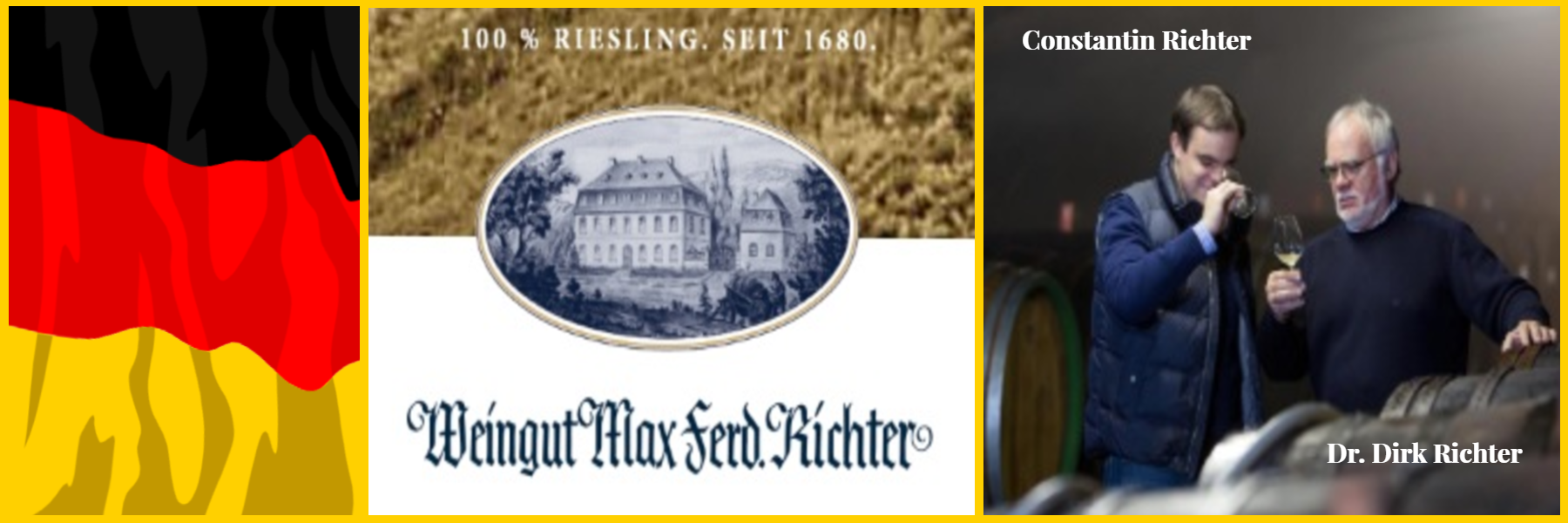
The Richter family has owned vineyards in the Mosel since 1680, making it one of the region's oldest continuously family-run estates. The modern estate was established in the late nineteenth century by Max Ferdinand Richter, from whom it takes its name. Throughout the twentieth century the family (led by Dr. Dirk Richter) acquired parcels in many of the Mosel's greatest vineyards, enabling the estate to produce wines from an unusually diverse collection of sites. This long continuity has fostered an intimate understanding of each vineyard's individual character, and many vines are now several decades old, with some ungrafted parcels surviving on original rootstocks due to the Mosel's slate soils.
The estate farms approximately 20 hectares, with vineyards spread across some of the Middle Mosel's most celebrated slopes. These include Brauneberger Juffer and Juffer-Sonnenuhr, Graacher Himmelreich, Graacher Domprobst, Wehlener Sonnenuhr, Erdener Treppchen, Mülheimer Helenenkloster, Mülheimer Sonnenlay and Veldenzer Elisenberg. Each site contributes a distinctive expression of Riesling shaped by subtle differences in exposure, elevation and slate composition.
Slate is the defining geological feature throughout the Mosel, but its colours and weathering patterns vary significantly. Around Brauneberg, weathered Devonian blue slate produces wines of remarkable elegance and finesse. Graach combines blue and grey slate with excellent water retention, giving wines that unite floral delicacy with substantial depth. The steep red slate and iron-rich soils of Erden create more powerful, spicy wines with greater extract and a recognisable smoky character. Wehlen's predominantly blue slate encourages exceptional purity and refinement, producing some of the region's most graceful Rieslings. Around Mülheim, particularly at Helenenkloster, blue slate mixed with pockets of loam provides excellent conditions for maintaining acidity while allowing grapes to achieve very high ripeness in favourable years.
The vineyards are among the steepest in Europe, with gradients frequently exceeding 60 percent. Nearly all vineyard work must therefore be carried out by hand. Pruning, canopy management and harvesting require exceptional labour input but allow careful selection of fruit. The steep slopes maximise solar exposure while the Mosel River reflects additional light and moderates temperatures, extending the growing season. Cool nights help preserve Riesling's naturally high acidity, one of the defining characteristics of the region.
Winemaking at Max Ferd. Richter remains deliberately traditional. Grapes are harvested by hand, often in multiple passes through the vineyard to select fruit at optimum ripeness. Fermentations are generally spontaneous, relying on indigenous yeasts naturally present on the grapes and in the cellar. Many wines ferment slowly over several months, sometimes continuing into spring. Large old oak casks (Fuder), which contribute virtually no oak flavour, remain central to the cellar. Their purpose is gentle maturation while preserving freshness and vineyard character rather than adding wood influence.
This restrained approach allows each vineyard to express itself clearly. Dry wines (Trocken), off-dry wines (Feinherb), Kabinett, Spätlese, Auslese and the full range of noble sweet Prädikat wines are produced according to vintage conditions. Richter has never pursued a single stylistic formula; instead, the wines reflect both place and year.
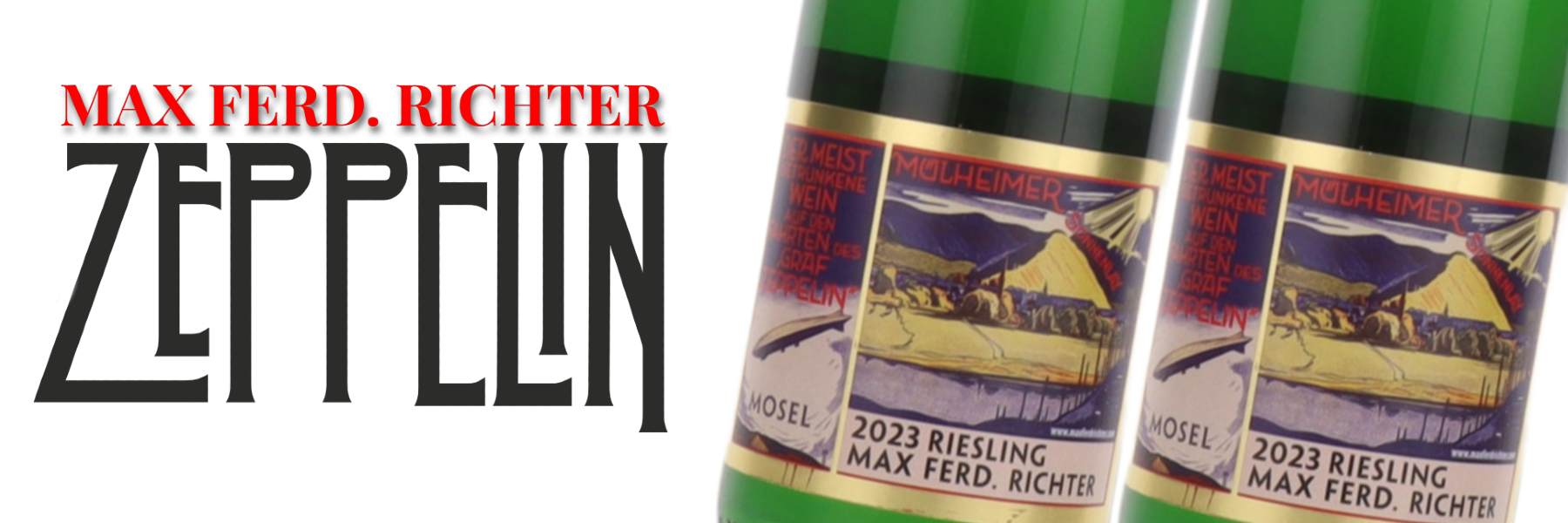
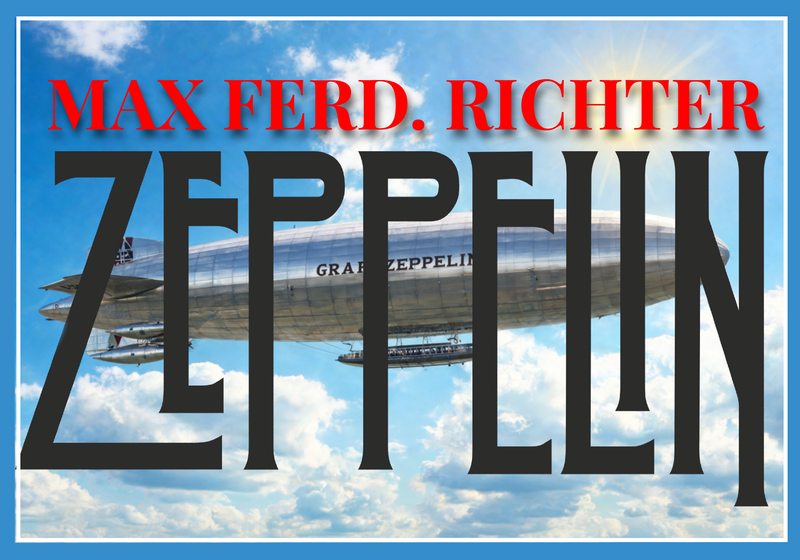
The winery is known internationally for its "Zeppelin" branded Riesling. So named as it was the wine served on the airship flights of the time. In the Zeppelin`s heyday of the 1920s and `30s, Mülheimer Sonnenlay Riesling was the wine most often poured on these grand flights operating from Europe to the USA. Also, it was to be found in Queen Elizabeth`s cellars and was served on State occasions. `Sonnen` means sunshine and `lay` is old German for slate. This idyllic terroir gives the wine zesty apple and peach flavours and a concentrated mineral structure, so typical of the Mosel valley.
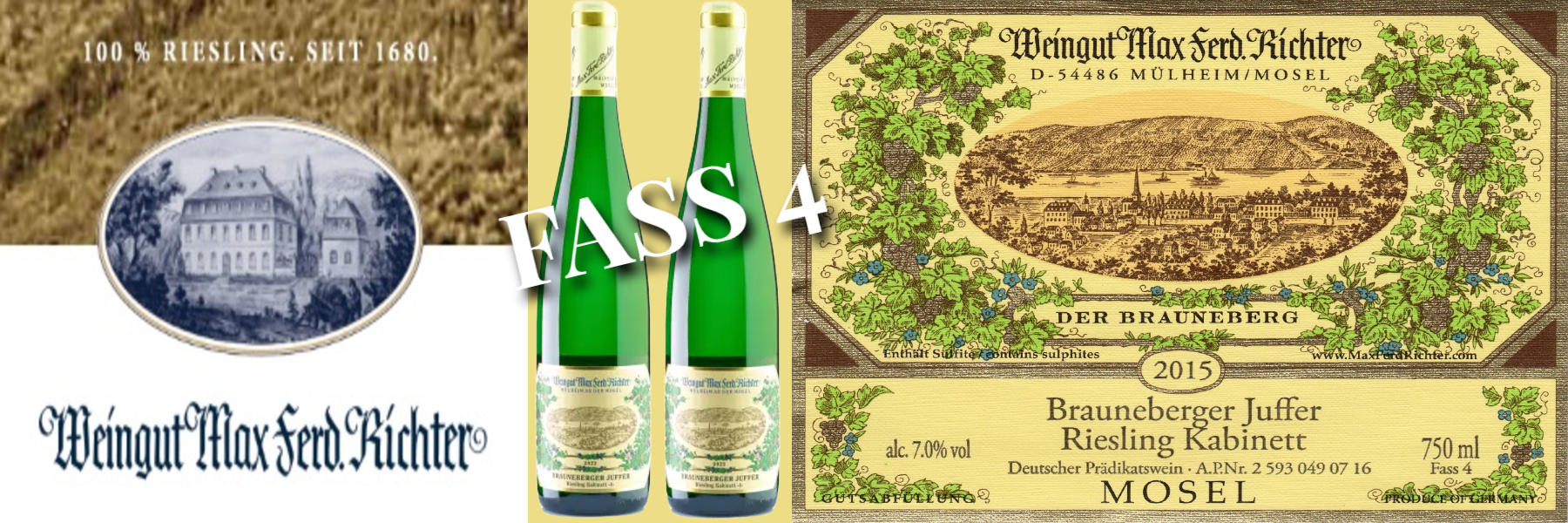
One of the estate's best-known wines is the Brauneberger Juffer Riesling Kabinett "Fass 4". Produced from the fruit of 90 year old ungrafted vines, originally identified simply by the number of the traditional wooden Fuder in which it matured, Fass 4 (a.k.a. Fuder 4) has become an internationally recognised bottling. It exemplifies classic Mosel Kabinett: around 7–8% alcohol, vibrant acidity, modest residual sugar and remarkable transparency. Delicate aromas of lime, green apple, white peach and spring flowers combine with pronounced slate minerality. Despite its sweetness, the wine tastes almost weightless due to its electric acidity and has exceptional ageing potential.
Comparing Richter's principal vineyard sites illustrates the remarkable diversity possible within the Mosel. The iron-rich, red-slate soil of the Erdener Treppchen offers lovers of fruity "Kabinett" wines just the style they seek with aromatic notes of grapefruit and pineapple, herbs and slate on the palate and a clear acid structure. The "Spatlese" from here have a riper fruit profile with more peach & mirabelle flavours. The Graacher Himmelreich vineyard offers greater accessibility and elegance, with bright citrus fruit, floral perfume and a finely balanced palate, with a comprehensive range including dry "Trocken" wines (slate/flint with herbal aromatics) right through to sweet, late-harvest "Auslese" (racy fruit acidity, apricots, peaches and ripe pears, honey and dried tropical fruits), while the Graacher Domprobst adds greater depth and concentration. This vineyard also produces one of Richter's renowned, exceptional quality, and exceedingly rare "Trockenbeerenauslese" dessert wine (lush textured, with honey & caramel, dried tropical fruit aroma). The unbelievably steep 80% slopes of the Brauneberger Juffer typically yields wines of considerable finesse, subtle stone fruit and silky texture, whereas Juffer-Sonnenuhr combines that elegance with greater intensity and length. One of the Mosel's best-known sites, Wehlener Sonnenuhr, with its unique sundial, often represents the purest expression of the region's delicacy, displaying filigreed acidity, crystalline fruit and remarkable precision. This notable vineyard has Richter's oldest vines, planted well over a century ago between 1890 and 1900, and produces not only a superb, dry "Grosses Gewachs" bottling (yellow fruits, floral hints and slate spice) but one of their greatest 3-Star "Auslese" (delicate apricot & peach fruit, floral apple blossom with hints of herbs and typical slate minerality). The estate's exclusive one hectare Mülheimer Helenenkloster, with its deep slate/clay soil, occupies a somewhat warmer yet balanced position, capable of producing richly flavoured wines while retaining freshness, making it particularly suitable for noble sweet styles in favourable vintages. It is the site from which M-F-R's thrilling "Eiswein" comes. This highly sought after wine has a combination of fresh and ripe notes of exotic fruits, nuances of honey, anise and white chocolate. Incredibly rich and dense fruit explode on the tongue, but are always kept fresh and juicy by the highly complex mineral texture. The enormous concentration indicates an almost infinite ageing potential.
Sweet wines remain one of Max Ferd. Richter's greatest strengths. The estate regularly produces outstanding Beerenauslese, Trockenbeerenauslese (TBA) and Eiswein when nature permits. These wines depend entirely on exceptional climatic conditions rather than deliberate production targets.
Trockenbeerenauslese requires grapes almost completely desiccated by Botrytis cinerea (noble rot), concentrating sugars, acids and flavour compounds to extraordinary levels. Richter's TBA wines, often sourced from Helenenkloster alongside top parcels in Brauneberg or Wehlen, display extraordinary complexity with flavours of apricot preserve, candied citrus peel, saffron, honeycomb, caramelised pineapple and exotic spice, balanced by Riesling's naturally high acidity. They can evolve for many decades.
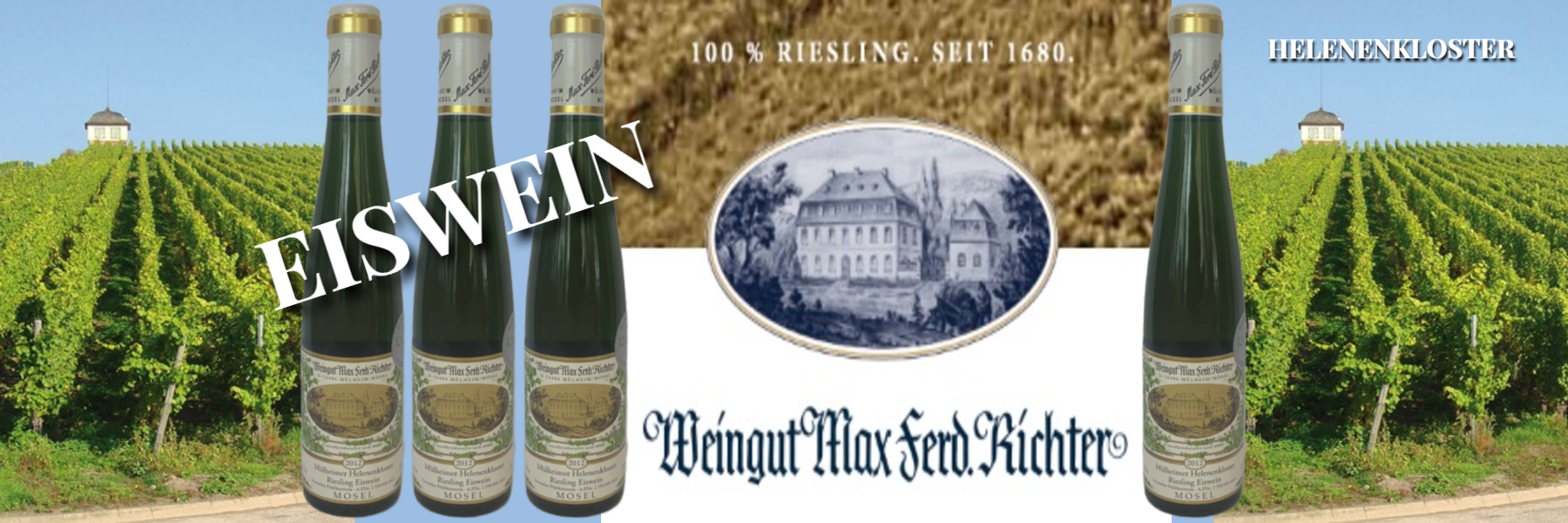
Eiswein represents a different style of sweetness. Grapes remain on the vine until temperatures fall below approximately -7°C, allowing harvest while frozen. Pressing separates concentrated juice from ice crystals, producing intensely sweet yet remarkably pure wines free from botrytis influence. Typical flavours include crystalline citrus, white peach, apple, quince and vibrant mineral freshness. As winters have become milder, genuine Eiswein has become increasingly rare throughout Germany, making successful vintages especially prized.
Climate change presents both opportunities and challenges for Max Ferd. Richter. Warmer growing seasons have generally improved the consistency of ripening, reducing the frequency of under-ripe vintages that characterised much of the twentieth century. In many recent years growers have harvested fruit with greater physiological ripeness while retaining excellent acidity, producing wines of remarkable balance.
However, continued warming may gradually alter the estate's portfolio. Pinot Blanc (Weißburgunder) and Pinot Noir (Spätburgunder) are increasingly viable in the Mosel as longer, warmer summers allow more reliable ripening. Richter already cultivates small amounts of these varieties, and expansion seems plausible, particularly on sites less ideally suited to Riesling. Pinot Noir could benefit especially from south-facing slate slopes capable of accumulating heat while still maintaining freshness.
The character of Riesling itself may also evolve. Kabinett wines with naturally low alcohol and pronounced residual sugar have traditionally depended upon moderate sugar accumulation combined with high acidity. Warmer seasons encourage higher sugar levels, making the production of truly delicate Kabinett increasingly challenging. Earlier harvesting may preserve freshness, but achieving the ethereal balance exemplified by wines such as Fass 4 could become less frequent. Conversely, dry Rieslings with greater concentration and slightly higher alcohol are likely to become more common.
Demand also favours this direction. International markets increasingly appreciate dry German Riesling, and warmer vintages make dry styles easier to produce without sacrificing fruit intensity. Red wines may gradually occupy a larger proportion of Mosel vineyards, although Riesling will almost certainly remain the estate's defining variety because of its unique suitability to slate soils and the Mosel's distinctive climate.
Within the hierarchy of elite Mosel producers, Max Ferd. Richter comfortably belongs among the region's finest estates. Compared with Dr. Loosen, Richter generally produces slightly more classical, understated wines, emphasising elegance over sheer fruit richness. Alongside J.J. Prüm, Richter shares a commitment to long-lived, delicately balanced Rieslings, although Prüm's wines often display even greater reserve in youth. Markus Molitor offers an enormous range with greater stylistic diversity and often higher ripeness levels, whereas Richter remains more restrained and traditionally proportioned. Fritz Haag similarly pursues precision and purity, making the two estates close stylistic relatives. Egon Müller, whose Scharzhofberger wines from the Saar occupy an almost mythical status, remains the benchmark for transcendent Kabinett and noble sweet Riesling, yet Richter's finest bottlings—particularly from Graach, Brauneberg and Erden—are fully capable of standing alongside the greatest wines of the Mosel.
Ultimately, Max Ferd. Richter represents the enduring strengths of traditional Mosel viticulture: meticulous farming, minimal intervention, profound respect for terroir and an unwavering belief in Riesling's ability to translate place into wine. While climate change will inevitably influence grape varieties and wine styles over coming decades, the estate's deep understanding of its historic vineyards should enable it to adapt without losing the elegance, balance and longevity that have defined its wines for generations.