

The ancient Greek word Meghas aptly describes the monumental contribution that the wines made in this hot, dry and dusty land have given to the vinous world over many, many centuries. They truly are MEGA.
It does depend on when (or where) you first discovered them. It used to be all about Retsina. Poorly made wine, made even worse, by the addition of pine resin. Nowadays, there are some serious producers making these wines using specially selected tress for the best resin. It's got to be the right type of pine from a particular forest to get the quality. Bet you didn't know that?
A warning here: Beware the novelty "wine in a barrel", sold by the glass direct from the bar counter in local beach-front Greek tavernas. Permanently "topped up" and permanently oxidised. Simply a delicious tasting experiemce (NOT), when paired with the imeviatable Greek salad. From personal experience I can vouch for the fact that one such establisment, located only a mile or so from a really good wine producer, didn't stock their brilliantly fresh-tasting Kydonista white (Pure aromatics of wild herbs, lemongrass, white fleshed fruits and fennel with a good bite on the palate), favouring some knackered yellow dross from a cheap wholsaler in Athens. Always search out quality, if you possibly can, when choosing a bottle of wine. The "good stuff" was only a few euros a bottle from the winery, but too expensive for the taverna. Standards, dear boy, standards.
The wines of Greece are, in general, mostly well hidden on the UK market, with many being sold through specialist restaurants which want to remain loyal to their cuisine's roots. Some years' ago, when Oddbins were at their peak fame, Greek wines (with all their unreadable script labels still intact and untranslated) were launched onto an unsuspecting bunch of oenophiles. If you'd been on holiday to mainland Greece, or to the islands, you might have spotted a few familiar favourites, but could you ask for them in store? It was more a case of "point at the relevant bottle", after you'd caught the eye of a member of staff who, of course, being a student of ancient Greek philosophy, would stare disdainfully back at you with a look implyinng, "Why can't you read the label, you utter pleb?" As an occasional visitor to their long defunct Exeter store, I can assure you this was a normal reaction. Just don't ask for a single malt whisky suggestion... you'd never leave the store. Definite nerd overkill on this subject!

Photo: Athens and Attica - The home of Restina from the Savatiano grape
Greece has one of the world’s oldest winemaking traditions, with viticulture deeply rooted in its history, culture and cuisine. Today, Greek wine combines this heritage with modern vineyard management, technology and winemaking techniques, producing an increasingly diverse range of high-quality wines. The country’s varied landscapes, from volcanic islands and coastal plains to mountainous vineyards, create distinctive terroirs and a remarkable diversity of styles. Quality-wise, in my opinion, wines made at sea level, in the unrelenting heat, are bland and flat, whereas, tose made at altitude, keep their acid balance and freshness of fruit. Look out for the "mountain" wines from any Greek region. They will be far better than those made elsewhere. The exception to this is probably the sun-dried (Vinsanto style) Georgas "Aged Sweet White" Savatiano based wine from Attica (close to Athens airport) where the harvested grapes soak up every bit of sunlight to super ripen the sugars, making a fantastic, natural, sweet dessert wine.
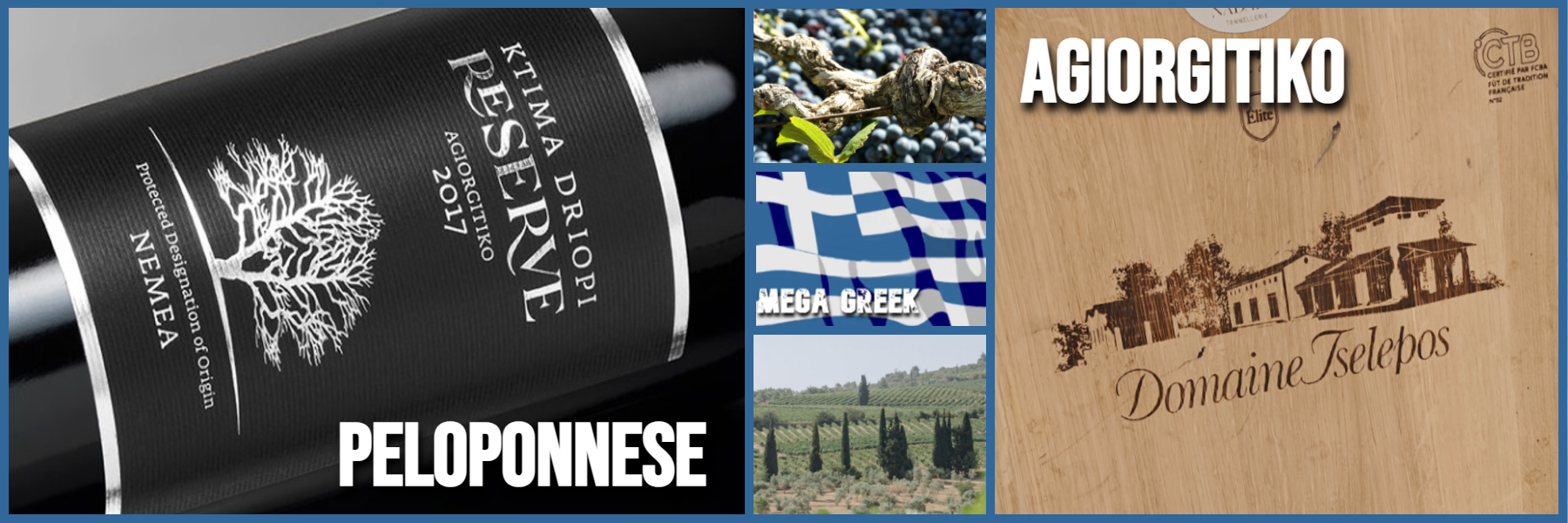
Photo: Nemea's mountainous vineyards grow Agiorgitiko grapes for rich, oaked reds including those from Ktima Tselepos Driopi. A personal, but expensive, favourite of mine.
Greek wine regions include Northern Greece, Central Greece and Attica, the islands of the Aegean and Ionian seas, Crete, and the Peloponnese. The Peloponnese is particularly important, with Nemea renowned for its red Agiorgitiko, and Mantinia for aromatic white wines made predominantly from Moschofilero. The Agiorgitiko variety can produce everything from fresh, fruity reds to fuller-bodied, age-worthy wines, while Moschofilero is typically associated with fresh, aromatic and lively whites.
In recent times, Greece's native grapes have become central to its modern wine identity. Alongside Agiorgitiko and Moschofilero key varieties include Assyrtiko, famous for its crisp, mineral-driven wines with many originating from Santorini, and Xinomavro, (think similar to Pinot Noir or Nebbiolo) an expressive red variety associated particularly with northern Greece. Savatiano, Roditis, Mavrodafni and Limnio add further diversity, while traditional Retsina remains a distinctive wine style.

Photo: Santorini Island in the Aegean Sea is home to many succeddful wines from the Assyrtiko grape including Argyos Estate
The striking, nerve-tingling acidity of modern-day Santorini Assyrtiko is probably the most widely known feature of any Greek white in the UK, with the established producers finding ever older vines (100+ years) to make very expensive bottles selling for £30-£50 each, with some reaching well over £100. If you appreciate the bone-dry character of these wines, better value can often be found from Crete and on the Greek mainland but, if you can afford the "real thing", then go for it. You might want to book an appointment with your dentist to check on what's left of your teeth's enamel after a few bottles. Whoever thought wine drinking could be hazardous to your health?
Recently introduced to the nange at Frazier Jones earkier this year is the notable Peloponnese-based producer, Cavino, founded in Aigio in 1958. Drawing on the distinctive mountain vineyards of Aigialeia, Cavino works with indigenous varieties alongside international grapes. Its wines illustrate how Greece’s native varieties and regional terroir can be presented through contemporary winemaking for both domestic and international markets.
Cavino's Mega Spileo Estate was originally a monastic site dating back to 1550. Cultivation was gradually abandoned in the late 1980s as the monks left the monastery. In 1999, the vineyard was replanted under a long-term lease, marking the rebirth of a legendary location. The Achaian mountain slopes, notably the Estate’s four carefully selected vineyards spread over a total of 28ha, are ideal for the cultivation of a plethora of local and international varieties, making these vineyards some of the most prominent in Greece. This unique terroir produces high-quality wines that have earned awards one after the other, as well as accolades from prominent wine critics.
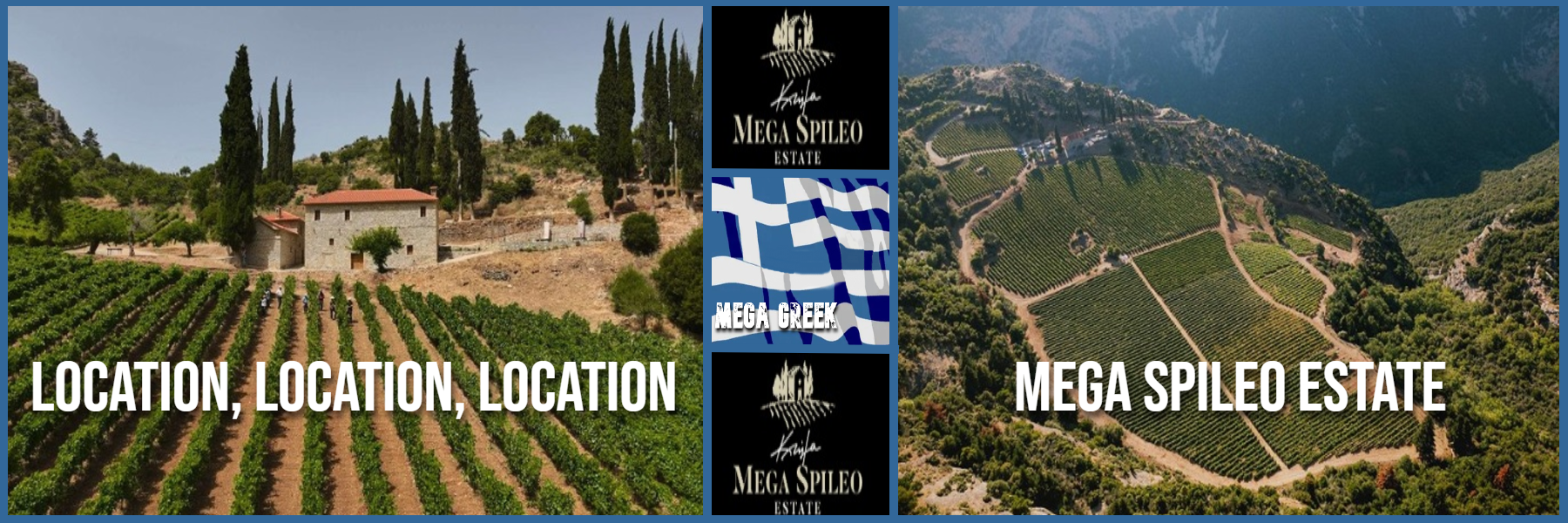
Photo: Cavino's Mega Spileo Estate takes mountain vineyard planting to new heights (880 m.a.s.l.) in the Vouraikos Gorge
Domain Mega Spileo Assyrtiko, Cavino S.A., Achaia PGI, Peloponnese, Greece, 2024
An oak aged wine, straw yellow in colour, with intense aromas of stone fruits, grapefruit, dried herbs, and mineral notes. Dense and full-bodied in the mouth, rich in fruit, balanced by the characteristic Assyrtiko saline acidity. A long aftertaste.
(Assyrtiko is pronounced - Ah-seer-tea-co)
Historoots Moschofilero, Cavino S.A., Peloponnese PGI, Greece, 2025
Pale yellow colour with green hues. Citrus, white flowers and roses in the nose. Smooth in the mouth with soft acidity and flowers on the palate. Fresh, dry and unoaked with a similar flavour profile to wines made using the Muscat grape.
(Moschofilero is pronounced - Moss-co-fee-lair-oh)
Historoots Agiorgitiko, Cavino S.A., Peloponnese PGI, Greece, 2024
An unoaked style showing an Intense red colour with purple hues. Red cherry fruits, lavender and buttery notes on the nose. Soft, with velvety tannins in the mouth, fruitiness and sweet spices on the palate.
(Agiorgitiko is pronounced - Eye-or-yit-eeko)
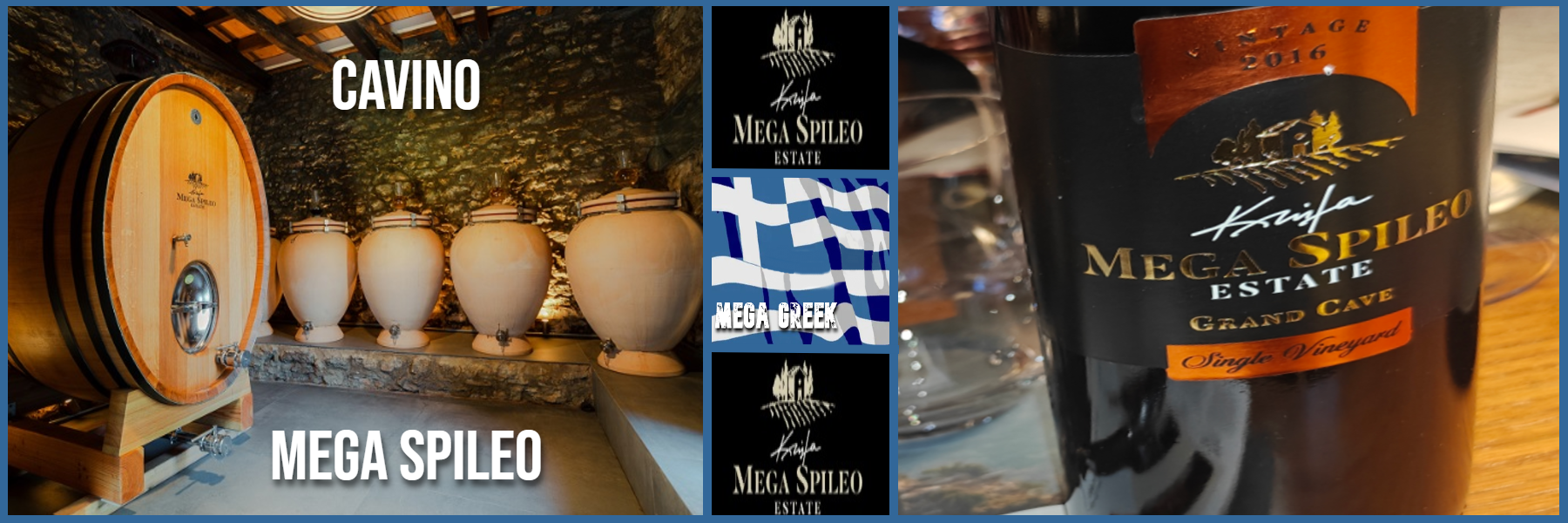
Photo: Large wooden vat and clay amphora at Mega Spileo